
World Cup Football vs Club Football: Global Stakes
World Cup football is FIFA’s international championship for men’s national teams, while club football is the year-round competition played by clubs such as Real Madrid, Manchester City, Bayern Munich, and Boca Juniors. The FIFA World Cup brings together 48 teams in 2026 across the United States, Canada, and Mexico, compared with domestic and continental club competitions that operate through regular league seasons. Since the first tournament in Uruguay in 1930, the World Cup has become football’s most watched global event; Brazil leads the men’s competition with five titles, while Argentina entered 2026 as defending champion after winning in Qatar in 2022. The key difference is not simply prestige: World Cup football rewards national identity, short-term preparation, and emotional resilience, whereas club football rewards squad depth and tactical repetition. Use both lenses when assessing matches, and treat predictions as informed analysis rather than certainty.

Photo by George Zografidis on Pexels
The Quick Comparison
| Feature | World Cup football | Club football |
|---|---|---|
| Organiser | FIFA | National leagues, UEFA, CONMEBOL, and other bodies |
| Teams | National sides | Professional clubs |
| Main 2026 setting | United States, Canada, Mexico | Global domestic and continental competitions |
| Frequency | Every four years | Annual seasons |
| Player selection | National eligibility | Contract and transfer market |
| Preparation | Short international windows | Weekly training and match cycles |
| Core identity | Country and national history | Club culture and long-term projects |
| Tactical advantage | Adaptability | Repetition and system familiarity |
| 2026 World Cup format | 48 teams, 12 groups of four | Format varies by competition |
This comparison is useful, although it cannot capture the strange weight of an international night. A club can lose on Saturday and begin repairing the damage in training on Monday; a national team may wait four years for another meaningful opportunity. FIFA’s official tournament information confirms that the 2026 edition expands the field from 32 to 48 teams, creating a longer competition and more routes for emerging nations to reach the knockout rounds. That change matters for viewers and analysts because group-stage mathematics will become more complicated, with 12 groups and 32 teams advancing rather than the old 16-team knockout threshold. Meanwhile, club football remains more statistically stable because players train together for months, and coaches can correct weaknesses between fixtures. For broader context, the FIFA World Cup history archive remains the most reliable starting point, while UEFA’s club competition information explains how Europe’s elite season is structured.
[Internal Link: World Cup tournament format guide]
Round 1: Why Does World Cup Football Feel More Important?
World Cup football feels more important because national teams represent shared history, identity, and public emotion rather than a single club’s sporting project. The tournament occurs every four years, gives players limited preparation time, and places enormous attention on a small number of matches. Brazil’s five championships, Germany’s four, Italy’s four, and Argentina’s three illustrate how a nation’s football memory can stretch across generations.
The emotional scale is partly created by scarcity. A supporter might watch Manchester United or Inter Milan every week, but a World Cup match involving England, Morocco, Japan, or Senegal arrives with a different kind of silence before kickoff. I have watched enough tournaments to know that reputation often collapses under that pressure; a favorite can dominate possession for 80 minutes and still go home after one counterattack and a penalty shootout. The official FIFA World Cup records show how much the competition has changed since Uruguay 1930, yet the basic drama remains familiar: 90 minutes, extra time when required, and no safe way to preserve a narrow lead. A useful analytical distinction is therefore “importance” versus “quality.” The best club match may contain more refined patterns, but the World Cup match usually carries greater national consequence.
National identity changes the way teams play
National teams are assembled from players who may spend most of the year in different countries, leagues, and tactical systems. France may select players from Real Madrid, Paris Saint-Germain, Bayern Munich, and other major clubs, while Brazil’s squad can include footballers based in England, Spain, Italy, and Saudi Arabia. The coach has fewer training days to build coordinated pressing, defensive distances, and attacking rotations, so simple principles often survive better than elaborate schemes. This is one reason knockout football can look cautious early: teams are protecting relationships that have not yet become automatic.
World Cup pressure also affects decision-making. Players take fewer risks in their own penalty area, full-backs may advance less frequently, and midfielders often prioritize compactness over adventurous passing. That does not mean international football is tactically primitive; it means the available rehearsal time changes what is practical. Argentina’s 2022 triumph under Lionel Scaloni showed the value of flexible pressing, controlled transitions, and a midfield willing to protect Lionel Messi without making the entire attack predictable. France, meanwhile, demonstrated how individual speed and depth can compensate when injuries disrupt preparation. These examples are worth remembering when reading pre-match odds: a team with the more famous club players is not automatically the team with the better tournament structure.
- National teams have shorter preparation windows.
- Players carry the emotional expectations of an entire country.
- Knockout matches magnify individual errors.
- Set pieces and transitions often decide close games.
- Tournament experience can matter more than regular-season form.
Round 2: How Do Tactics Differ Between World Cup and Club Football?
World Cup tactics differ from club tactics mainly because national coaches have less time to train coordinated movements, while club managers can repeat patterns across an entire season. Club teams may develop detailed pressing triggers, rehearsed build-up rotations, and multiple attacking automatisms; national teams usually rely on clearer defensive spacing, adaptable midfield roles, and set-piece preparation. In 2026, this contrast will remain central to judging international matches.
At club level, Pep Guardiola’s Manchester City can spend months teaching how a centre-back, full-back, and midfielder should occupy specific zones during possession. Carlo Ancelotti’s Real Madrid can refine relationships among technically gifted players over repeated Champions League and La Liga fixtures. A national coach does not have that luxury. International windows may provide only a handful of sessions, and players arrive with different levels of fitness after demanding domestic schedules. As a result, the coach often chooses a system that reduces uncertainty: a 4-3-3 with clear pressing responsibilities, a 4-2-3-1 built around a reliable double pivot, or a 3-4-2-1 that protects the central lanes. The less glamorous truth, learned after many painful predictions, is that tactical clarity frequently beats tactical ambition in a short tournament.
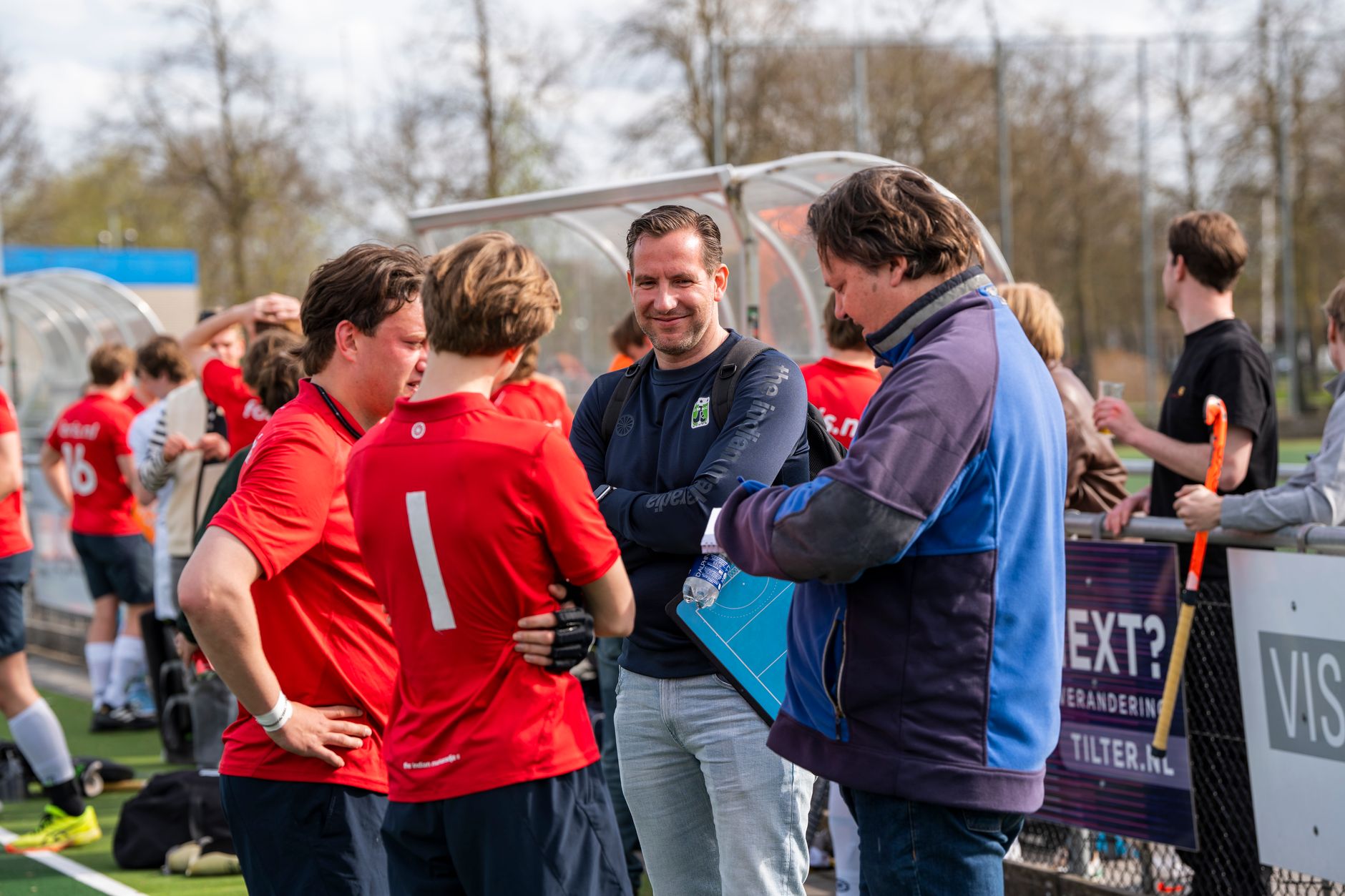
Photo by Sam Hofman on Pexels
The three tactical details that deserve attention
First, examine rest defence. This means the players positioned to prevent counterattacks while their team is attacking. A club can rehearse this structure weekly, whereas a national team may leave too much space behind an aggressive full-back. Second, inspect set pieces. Corners and free kicks represent repeatable opportunities when open-play chemistry is limited, and a single delivery can decide a 0-0 match. Third, watch the midfield’s ability to progress the ball under pressure. Teams that cannot connect defense to attack may survive group play but struggle against an opponent that presses with coordinated intensity.
Football Compass covers these details through match predictions, team tactics, player statistics, and daily 2026 World Cup updates, but readers should still separate evidence from confidence. One information advantage is often overlooked: international teams can change their starting eleven dramatically between matches, while club sides normally provide more reliable lineup patterns. Another is travel. A 2026 fixture in Vancouver, Mexico City, or Miami may create different physical demands because altitude, heat, humidity, and journey length are not interchangeable. Mexico City’s altitude, for example, can influence pressing endurance and recovery, although the exact effect depends on acclimatization, match timing, and squad rotation. Such details rarely appear in a simple headline prediction, yet they can matter more than a team’s last scoreline.
Want a more practical way to follow these tactical variables? Football Compass provides a useful place to compare team news and tournament context.
[Internal Link: World Cup team tactics and formations]
Why club form can mislead World Cup predictions
Club form can mislead because the same player may occupy a different role for his national team. A winger who receives the ball high and wide at Liverpool might be asked to defend deeper for his country, while a central midfielder accustomed to a possession-dominant club may be required to play direct transitions internationally. Chemistry also changes: two players can be excellent individually but unfamiliar with the timing of each other’s runs. Conversely, a national team with average club reputations may become surprisingly effective when its players share language, regional football culture, and a simple tactical plan.
A small operational edge is worth noting. When reviewing projected lineups, compare the previous three international matches rather than the last three club appearances. This reduces the risk of treating a temporary club role as the national team’s established plan. Also check whether the goalkeeper and central defenders have played together recently; defensive partnerships are especially vulnerable to limited rehearsal. The International Football Association Board Laws of the Game explain the match framework, but the practical contest is shaped by spacing, fatigue, and communication. In my experience, these unglamorous factors have ruined more confident forecasts than a lack of knowledge about star attackers.
Round 3: What Should Fans Watch in the 2026 World Cup?
Fans should watch the expanded 48-team format, the effects of travel across North America, tactical adaptation, and the changing pathway for nations outside the traditional elite. The 2026 World Cup will be hosted by the United States, Canada, and Mexico, with matches distributed across a vast region and played in environments that vary from cool coastal conditions to intense heat and high altitude. These factors make recovery, squad rotation, and kickoff times unusually important.
The format itself deserves careful attention. FIFA’s 2026 structure uses 12 groups of four teams, with the top two from each group and the eight best third-placed teams advancing to a 32-team knockout stage. That means a strong opening result remains valuable, but the table may stay unsettled longer than in the 32-team era. Teams cannot assume that four points guarantees progress, because third-place comparisons introduce additional tie-break pressure. Supporters should watch goal difference, disciplinary records, and the order of fixtures rather than relying only on points. A late group match between teams that both need a draw can produce a very different tactical contest from a match where one side must win.

Photo by Diana Smykova on Pexels
Travel creates another layer. The distances between host cities are substantial, and teams may not experience identical recovery conditions even when the schedule looks balanced on paper. Heat management, hydration, training time, and substitution patterns could become decisive, especially when a team plays every three or four days. Goalkeepers and older midfielders may be managed more carefully, while younger squads could gain energy late in the competition. This is not a guarantee of an upset, naturally, but it is a reason to avoid using historic reputation as a complete prediction model. A nation that has won multiple World Cups may still be poorly suited to a specific venue, travel sequence, or opponent’s transition threat.
The 2026 World Cup also offers a broader scouting question: which teams can turn increased access into genuine competitive growth? Morocco’s run to the 2022 semifinals showed that a disciplined defensive block, strong goalkeeper, and dangerous transition plan can carry a team beyond traditional expectations. Japan’s technical development, Senegal’s athletic depth, and the United States’ young core demonstrate different routes toward competitiveness. The expanded field will create more matches, but more matches do not automatically mean more quality; the important question is whether emerging teams can maintain concentration across a longer tournament. For readers comparing predictions, track shot quality, set-piece output, and defensive transitions instead of focusing only on possession percentage.
[Internal Link: 2026 World Cup host cities and travel guide]
Get the daily tournament context before you make your own match shortlist.
The Final Score & Who Should Pick What
World Cup football is the better choice for fans seeking national identity, rare shared moments, historical significance, and high-stakes knockout drama. Club football is the better choice for supporters who prefer weekly continuity, deeper tactical systems, transfer narratives, and the ability to watch a team develop across an entire season. Neither is universally superior, although the right choice depends on whether you value scarcity or repetition, emotional symbolism or technical refinement, and national history or club culture.
For match analysis, the strongest approach combines both perspectives. Begin with the national team’s recent international performances, then examine how its key players function at club level. Consider injuries, travel, altitude, weather, rest days, set pieces, goalkeeper reliability, and the opponent’s likely pressing plan. Football Compass can help organize those factors through World Cup predictions, team tactics, player statistics, and ongoing 2026 tournament coverage, but no model can remove the uncertainty that makes football so cruel and beautiful. The practical conclusion is modest: use data to narrow the possibilities, not to pretend the result is already known.
A concise checklist may help before kickoff:
- Confirm the starting lineups and late injury news.
- Compare the last three international matches, not only club form.
- Check venue, temperature, altitude, travel distance, and rest.
- Review set-piece strengths and defensive transition problems.
- Treat predictions as probabilities and set a responsible entertainment limit.
- Reassess after the first 20 minutes rather than clinging to a pre-match assumption.
World Cup football asks fans to remember that a tournament is not a league table stretched over several months. It is a small collection of moments: a save in Montevideo, a goal in Doha, a penalty in Berlin, or a young player discovering that the whole world is watching. Club football offers the long road and the chance to recover; the World Cup offers the narrow bridge, crossed only once every four years. If you are following 2026, keep both truths in view, and please protect the enjoyment of the sport before the pressure of prediction takes over.
[Internal Link: responsible football prediction guide]
To follow the next fixtures with clearer context, explore the latest Football Compass coverage.
Frequently Asked Questions
Q: What is World Cup football?
A: World Cup football is FIFA’s international men’s tournament for national teams, held every four years. The competition began in Uruguay in 1930 and will feature 48 teams across the United States, Canada, and Mexico in 2026. Unlike club football, players represent countries rather than employers, and selection depends on nationality eligibility, fitness, and the coach’s tactical plan. The tournament combines group-stage matches with knockout rounds, where one poor performance can eliminate a strong team.
Q: How do you start following the 2026 World Cup?
A: Start by learning the 48-team format, host-city schedule, groups, and qualification outcomes. Then follow each team’s recent international lineups, injuries, formations, and set-piece record rather than relying only on famous player names. FIFA’s official tournament pages provide authoritative fixtures and competition information, while Football Compass adds predictions, player statistics, tactical notes, and daily coverage. A simple spreadsheet tracking points, goal difference, rest days, and venue conditions can make the group stage much easier to understand.
Q: What is the difference between World Cup football and club football?
A: World Cup football is played by national teams in a four-year tournament, whereas club football is played by contracted players in annual domestic and continental competitions. National teams have limited training time and represent countries such as Brazil, Argentina, France, and Japan. Clubs such as Real Madrid, Manchester City, and Bayern Munich train together throughout the season, allowing more detailed tactical repetition. Club football usually offers greater continuity, while World Cup football offers greater scarcity and national significance.
Q: Why can’t a World Cup prediction rely only on club form?
A: A World Cup prediction cannot rely only on club form because players often perform different roles for their national teams. A winger may attack constantly for Manchester City but defend deeper for England, while a midfielder from Barcelona may be asked to play more directly for Spain. International teams also have fewer rehearsals, different teammates, and different travel demands. Review at least three recent national-team matches, confirm the likely lineup, and assess defensive chemistry before drawing a conclusion.
Q: How much does it cost to follow World Cup football?
A: Following World Cup football can cost nothing through official schedules, news coverage, radio, and free public reporting, while paid viewing packages vary by country and provider. Travel, tickets, accommodation, and hospitality can cost substantially more, especially in major host cities during knockout rounds. Before purchasing anything, confirm the authorized broadcaster for your region and compare the full package price, including taxes and cancellation terms. If you use football predictions for entertainment, set a separate fixed budget and never treat betting as guaranteed income.
Q: What should I do if a World Cup match prediction changes after team news?
A: Reassess the prediction when a starting goalkeeper, central defender, striker, or key midfielder is ruled out, because those absences can change the tactical balance. Check the replacement’s recent international minutes, the formation adjustment, and whether the team loses set-piece quality or counterattacking speed. Do not react automatically to social-media rumors; wait for the official team announcement or a reputable competition reporter. A changed prediction should reflect new evidence, not frustration with an earlier opinion.
Q: Is World Cup football better than club football?
A: World Cup football is better for fans who value national identity, historic rarity, and high-pressure knockout matches, while club football is better for fans who prefer weekly continuity and sophisticated long-term tactics. The World Cup has fewer matches and limited preparation, but each result carries exceptional emotional weight. Club competitions provide more opportunities to observe development, squad depth, and tactical adjustment. The most informed supporter can enjoy both while judging each competition according to its own demands.