
Why 48 Teams Are Reshaping World Cup 2026 Football
The FIFA World Cup 2026 will feature 48 teams across Canada, Mexico, and the United States, making it the largest edition in tournament history. FIFA’s competition begins on June 11, 2026, and concludes with the final at MetLife Stadium in New Jersey on July 19, with 104 matches scheduled across 16 host cities. Football Compass, a FIFA World Cup focused content site, will follow team tactics, player statistics, match predictions, and daily tournament developments for supporters worldwide. The expanded format creates more qualifying opportunities, but it also changes group mathematics, squad rotation, travel planning, and knockout-route analysis. Los Angeles will host eight matches and a 39-day programme of fan celebrations, while Mexico City hosts the opening match. The practical takeaway is simple: assess World Cup 2026 football through format, geography, form, and confirmed line-ups rather than reputation alone.

Photo by Israel Torres on Pexels
The 2026 tournament feels distant only until one remembers how quickly football seasons disappear. I have watched enough World Cups to know that early confidence can be a rather expensive habit, especially when a supposedly settled team loses a full-back, a goalkeeper, or simply its nerve in the heat. This edition deserves closer examination because the familiar rhythm has changed: 48 nations, 12 groups of four, a Round of 32, and a much longer road to the final. The host countries also create a broad geographical story, from Vancouver and Seattle to Mexico City, Miami, Atlanta, and Boston. For readers using Football Compass, the useful question is not merely who might win World Cup 2026 football, but which teams can survive the tournament’s travel, climate, schedule, and tactical demands. Have you ever thought about how one extra match can alter a squad’s entire tournament? That small detail may matter more than a fashionable pre-tournament ranking.
If you would like a concise starting point, our [Internal Link: World Cup 2026 beginner’s guide] can help you map the competition before examining individual teams.
For a broader daily perspective, Football Compass combines match previews, player form, tactical notes, and tournament coverage rather than treating every fixture as an isolated prediction. Please remember that forecasts are probabilities, not guarantees, and any football-related wagering should remain legal, controlled, and within a personal budget.
Want the wider tournament picture before the group debates begin?
Myth 1: The 48-team World Cup will be easier to win — debunked
The 48-team format does not make the World Cup easier to win because the champion must now complete eight matches instead of seven, while managing a larger field and a new Round of 32. The tournament begins with 12 groups of four, and the top two teams from each group join the eight best third-placed teams in the knockout stage. More matches create more chances for injuries, suspensions, fatigue, and tactical surprises.
That structure changes how supporters should read the group stage. A strong nation may qualify without winning every match, while a third-placed team can still advance with a carefully managed points total. The old instinct of studying only the top two teams in each group is therefore incomplete. According to the official FIFA World Cup 2026 competition information, the expanded field is designed to include more national teams, but inclusion is not the same as competitive comfort.
There is also a calendar problem that casual previews often overlook. A team reaching the final will face one additional knockout match, and that extra game may force coaches to choose between full-intensity pressing and controlled possession earlier than they would prefer. In my experience, tournament fatigue rarely announces itself dramatically at first; a centre-back arrives half a step late, a winger stops tracking the opposing full-back, and suddenly the supposedly superior side is chasing the match. Football Compass will therefore track minutes played, substitution patterns, and injury status rather than simply repeating team rankings.
A useful pre-match checklist includes:
- Number of matches already played in the competition.
- Average player minutes among the starting eleven.
- Travel distance between the previous and next host city.
- Heat, humidity, altitude, and kick-off time.
- Whether the coach has a trustworthy second-choice midfielder or defender.
These details are especially important for teams that depend on high pressing. The system may work beautifully in the first two matches, then weaken when the same six or seven players are asked to cover enormous distances every four days. More teams may enter the tournament, but the route to the trophy is longer and less forgiving.
Myth 2: Host nations automatically gain a decisive advantage — partially true
Host nations receive genuine advantages in World Cup 2026 football, including familiar surroundings, supportive crowds, reduced uncertainty, and possibly more comfortable travel patterns, but hosting alone does not guarantee a deep tournament run. Canada, Mexico, and the United States qualify automatically as co-hosts, yet their competitive prospects still depend on coaching quality, squad health, and the level of opponents drawn into their groups.
The host effect is strongest when it improves preparation. Mexico City’s altitude, for example, is not a trivial backdrop; Estadio Azteca sits at roughly 2,240 metres above sea level, creating a different physical environment from coastal venues such as Miami or Los Angeles. Teams accustomed to lower altitudes may need to adjust warm-ups, hydration, and recovery routines. The United States also brings a large player pool, but its squad must translate domestic familiarity into reliable tournament structure. Canada, meanwhile, has developed an increasingly interesting generation around players such as Alphonso Davies and Jonathan David, though depth remains a crucial question.
The Los Angeles FIFA World Cup 2026 host information confirms that Los Angeles will host eight matches and provide 39 days of fan celebrations, including activities at the LA Memorial Coliseum and regional fan zones. That matters commercially and culturally, but it does not automatically improve a team’s expected goals or defensive organisation. A crowd can lift a side after a missed chance; it cannot repair a midfield that leaves thirty metres between its lines.
For supporters comparing host nations, I would separate the advantage into four measurable categories:
- Travel: fewer disruptive journeys may support recovery.
- Climate: players may perform more naturally in familiar conditions.
- Crowd pressure: home support can help, but it can also create anxiety.
- Expectation: public attention may become an additional burden.
The United States faces an especially complicated version of this final factor. A home tournament brings commercial attention, media scrutiny, and a demand to progress beyond reasonable expectations. Mexico knows the emotional weight of Estadio Azteca better than most nations, while Canada enters a home World Cup with a newer competitive identity. These stories are worth following, but they should not replace evidence from recent fixtures.

Photo by Jean-Daniel Francoeur on Pexels
To understand how altitude, travel, and player workloads may interact, see our [Internal Link: host-city conditions and stadium guide]. It is a modestly glamorous subject, perhaps, but tournament football has often been decided by unglamorous details.
Ready to compare the three host nations with a practical framework?
Myth 3: Famous players decide every World Cup match — flat-out false
Famous players influence World Cup matches, but individual reputation does not decide every result; tactical spacing, defensive transitions, set pieces, and substitution timing usually determine whether talent becomes a measurable advantage. Lionel Messi’s influence at Qatar 2022 was extraordinary, yet Argentina also required organised pressing, goalkeeper saves, midfield discipline, and a penalty shootout victory against France. The lesson is not that stars are unimportant, but that stars need a functioning structure around them.
World Cup 2026 football will probably feature established names such as Kylian Mbappé, Jude Bellingham, Vinícius Júnior, Jamal Musiala, and Erling Haaland, assuming fitness and selection remain favourable. However, tournament analysts should be cautious with highlight-based predictions. A forward can score twice against a weak defensive block while contributing little when opponents deny central space. Conversely, a defensive midfielder may influence the match through positioning that produces no obvious highlight at all.
A practitioner-level insight is to compare a player’s role with the likely opponent rather than ranking the player in isolation. A wide forward who thrives against a high defensive line may struggle against a compact 5-4-1 block. A possession-oriented midfielder may appear brilliant against passive opponents but vulnerable when pressed aggressively. Football Compass match previews should therefore examine:
- Where a team creates its final-third entries.
- Whether the opponent protects the half-spaces.
- How quickly the team reacts after losing possession.
- Which substitute can change the match after the 60th minute.
- Whether set-piece delivery targets a specific defensive weakness.
The FIFA Laws of the Game remain a useful reference when analysing handball, offside, fouls, and penalty decisions, particularly because small refereeing moments can shape knockout matches. The International Football Association Board states that “the Laws of the Game are the foundation of football,” and that foundation is easy to forget when a famous forward dominates the broadcast.
One information edge that is often missed concerns substitutions. In a long tournament, a coach with two tactically different attacking options may possess more practical value than a star who can only play one role. A team that can switch from a 4-3-3 to a 3-4-2-1 without losing defensive balance is often better equipped for knockout football than a more glamorous side with no second plan.
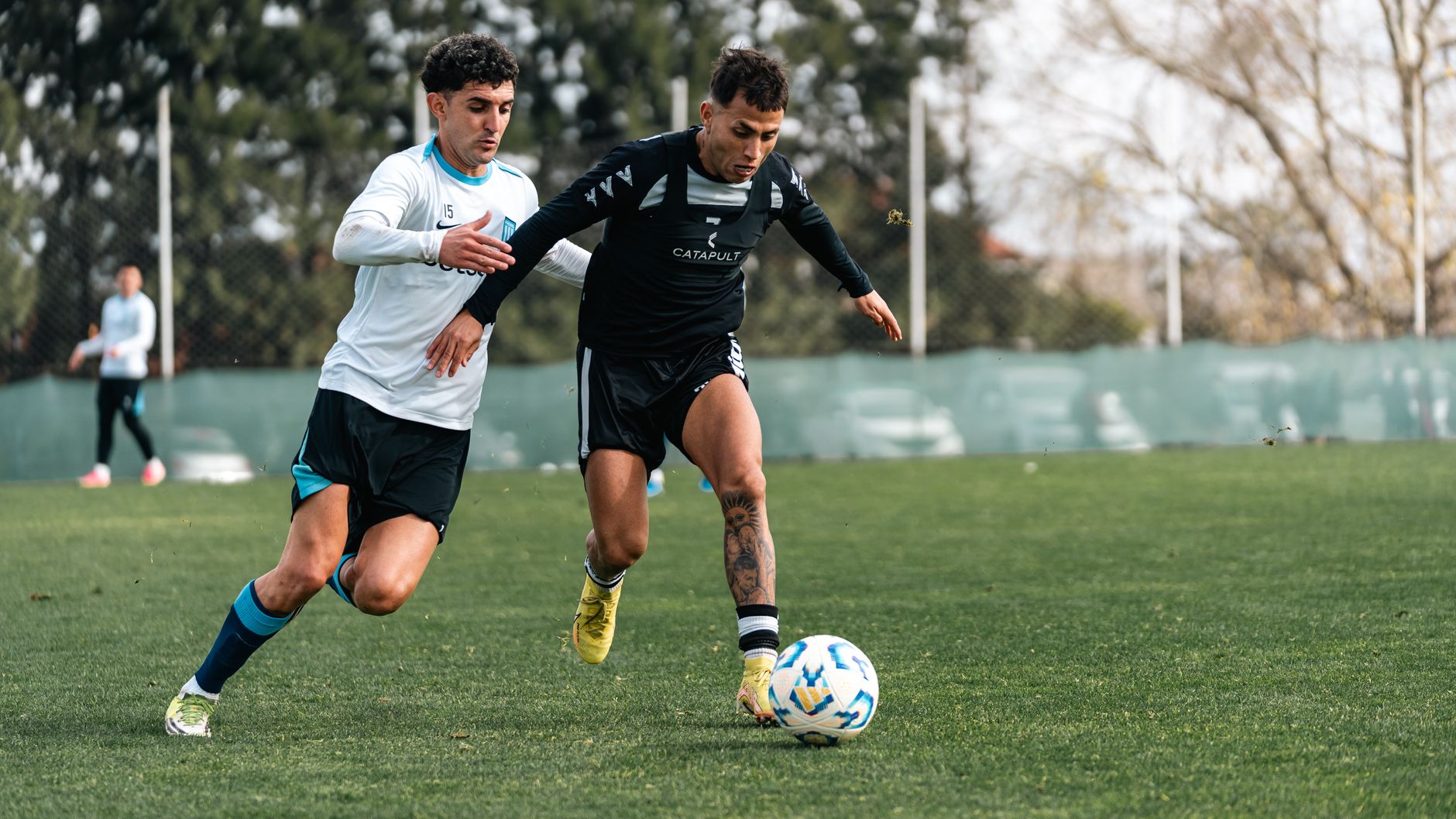
Photo by Franco Monsalvo on Pexels
For a deeper look at these patterns, readers may find our [Internal Link: World Cup tactical systems and formations] useful before making any player-based judgement.
What actually works when analysing World Cup 2026 football?
Reliable World Cup analysis combines confirmed squad news, recent tactical evidence, opponent matchups, venue conditions, and tournament incentives; no single ranking or star-player list is sufficient. The most useful approach is to build a repeatable checklist and update it after each official team announcement, injury report, and match.
A sensible process begins with information quality. Do not treat an old friendly, an unverified social-media report, or a dramatic headline as equal to a confirmed federation statement. The FIFA World Cup 2026 tournament page should be used for official competition information, while national federations remain essential for squad announcements and injury updates.
A practical analysis model can be organised as follows:
- Establish baseline form: review the previous five to eight competitive matches, giving more weight to recent fixtures.
- Separate performance from results: examine chances created, goals conceded, pressing success, and set-piece outcomes.
- Study the opponent: identify whether the opposing team defends high, mid, or deep.
- Check availability: confirm suspensions, injuries, travel, and expected rotation.
- Measure venue impact: consider altitude, heat, humidity, surface, and kick-off time.
- Model game state: ask what changes if the team scores first or concedes first.
- Reassess after line-ups: confirmed starting elevens are more valuable than early speculation.
One less-discussed edge case concerns third-place qualification. With eight third-placed teams advancing from 12 groups, a team may adopt a conservative approach in its final group match if a draw is likely to be enough. That can make the final round less predictable than a simple “must win” narrative suggests. The precise qualification threshold will depend on results across all groups, so responsible analysis should avoid claiming that a fixed number of points guarantees advancement before the tournament develops.
Another useful distinction is between team quality and tournament suitability. A side may produce excellent league-style football over nine months but lack the depth to navigate eight World Cup matches. Conversely, a less spectacular team with strong set pieces, a reliable goalkeeper, and disciplined defensive spacing can survive longer than expected. This is not romantic theory; knockout football has repeatedly rewarded teams that concede few transition chances.
At Football Compass, the strongest daily insights should therefore explain why a prediction exists, what could invalidate it, and which team news would change the assessment. That approach is less dramatic than declaring a certain champion in April, but it is considerably more honest.
Get the latest match-focused perspective before the tournament begins.
What to ignore before making World Cup predictions?
Ignore guaranteed-winner claims, unsupported injury rumours, head-to-head records stripped from context, and odds presented without an explanation of probability or risk. These shortcuts are attractive because they make a complicated tournament feel tidy, but they often conceal the information that matters most.
Be particularly wary of social-media videos showing a single training moment. A player missing a session may be following a recovery plan, while a player completing every drill may still lack match fitness. Likewise, a team’s friendly victory may say little about its competitive level if the coach used experimental line-ups or avoided tactical details. Football Compass can provide structured analysis, but readers should still distinguish confirmed information from interpretation.
Several common habits are worth discarding:
- Treating FIFA rankings as a complete prediction model.
- Assuming a star forward will start every match.
- Ignoring the opponent’s defensive style.
- Comparing teams only through raw goals scored.
- Overreacting to one result.
- Believing that a short price means a result is guaranteed.
- Forgetting responsible-gambling limits and local legal requirements.
A second information gain lies in travel sequencing. The three-country tournament creates unusual logistical variation, and not every team will experience the same distances or climate changes. A side moving between Vancouver, Dallas, and Miami may face very different recovery conditions from a team spending several matches within one region. The exact schedule and venue allocation should be checked as official information develops rather than guessed from a map.
The final error is emotional overconfidence. I have made it myself, more than once, usually after watching a magnificent ninety minutes and quietly promoting that performance into a prophecy. World Cups punish that habit. A deflection, a red card, a goalkeeping error, or a single set piece can overturn an otherwise accurate tactical reading. The best analysis remains flexible enough to say, “This was the most likely outcome,” rather than pretending that probability ever became certainty.
A grounded conclusion for World Cup 2026 football
World Cup 2026 football will be defined by expansion, geography, squad depth, and tactical adaptability rather than celebrity alone. The 48-team format, 104-match schedule, 16 host cities, and three host nations create more stories and more uncertainty than previous tournaments, while the final at MetLife Stadium on July 19 gives the competition a clear endpoint. For supporters, the most dependable habit is to combine official information with careful analysis of form, fitness, matchups, travel, and game state. Football Compass aims to make that process more useful through daily predictions, tactical coverage, player statistics, and tournament updates. Please enjoy the drama, keep forecasts in proportion, and if you choose to wager, use only legal services and a firm entertainment budget. The old tournament memories will return soon enough, perhaps with a different shape this time.
Stay informed with Football Compass as the 2026 tournament approaches.
Frequently Asked Questions
Q: What is the World Cup 2026 football format?
A: The FIFA World Cup 2026 format contains 48 teams divided into 12 groups of four. The top two teams from each group and the eight best third-placed teams advance to a Round of 32, followed by the Round of 16, quarter-finals, semi-finals, and final. The tournament includes 104 matches, so the eventual champion must win a longer route than champions faced under the 32-team format.
Q: When and where will the 2026 FIFA World Cup take place?
A: The 2026 FIFA World Cup will take place from June 11 to July 19, 2026, across Canada, Mexico, and the United States. The opening match is scheduled for Mexico City, while the final will be played at MetLife Stadium in the New York–New Jersey area. Matches will be distributed across 16 host cities, including Los Angeles, Vancouver, Seattle, Dallas, Miami, Atlanta, and Mexico City.
Q: How can I analyse a World Cup 2026 football match?
A: Analyse a World Cup 2026 football match by checking recent competitive form, confirmed line-ups, injuries, tactical matchups, venue conditions, and likely game states. Start with the opponent’s defensive structure, then examine how each team creates chances and responds after losing possession. Update the assessment when official team news appears, because an expected rotation or missing midfielder can change the tactical balance substantially.
Q: What is the difference between World Cup rankings and match predictions?
A: World Cup rankings describe broad team strength, while match predictions estimate the probability of a specific result under particular conditions. Rankings usually do not fully account for travel, altitude, current injuries, tactical matchups, or a coach’s likely rotation. A highly ranked team can still be a poor match-specific selection if its style clashes with a disciplined opponent.
Q: Are the three World Cup 2026 host nations guaranteed to perform well?
A: No, Canada, Mexico, and the United States are not guaranteed to perform well despite receiving home-region advantages. Supportive crowds, familiar conditions, and reduced logistical uncertainty can help, but squad depth, coaching, pressure, and opponent quality remain decisive. Mexico also faces altitude considerations in Mexico City, while the United States and Canada must handle intense public expectations.
Q: Why do player statistics matter in World Cup analysis?
A: Player statistics matter because they reveal contributions that goals and assists alone can miss. Progressive passes, ball recoveries, duel success, shot-creating actions, expected goals, and minutes played can show whether a player fits a specific tactical matchup. Statistics should be combined with video and role analysis, since the same number may mean something different for a possession team and a counter-attacking team.
Q: Can Football Compass guarantee a winning World Cup prediction?
A: No, Football Compass cannot guarantee a winning World Cup prediction because football contains unavoidable uncertainty. Football Compass provides match predictions, team tactics, player statistics, and tournament coverage to help readers make more informed assessments, not certain forecasts. Treat all predictions as probabilities, follow local laws, and never risk money needed for essential expenses.